
For a premium or designer brand, choosing a knitwear manufacturer can look simple at first.
Some founders start with a fixed idea:
“If my brand is premium, I should produce in Italy.”
Others contact factories in several countries, collect quotations, compare prices, and only then decide where to make the first sample.
Some prefer to judge suppliers by their website, company presentation and promises before sending any development work.
None of these approaches is necessarily wrong.
But knitwear is difficult to evaluate from price and presentation alone.
Knitting is very different from cut-and-sew production.
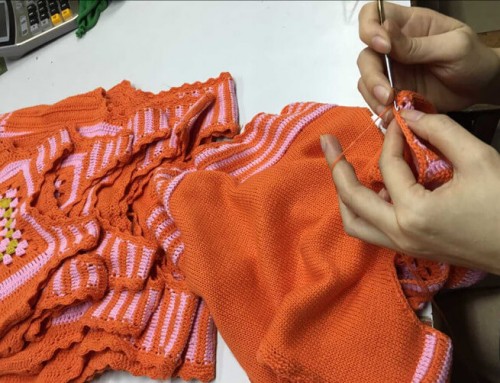
Yarn, gauge, stitch density, structure, shaping, linking, washing and finishing can all affect the final result.
Give the same sketch to two different factories and you can receive two garments that feel very different in handfeel, fit, weight and finishing.
So the more useful question is not:
“Which country is best?”
or:
“Which factory is cheapest?”
It is:
“Is this knitwear manufacturer actually right for the product my brand is trying to make?”
From our experience working with different kinds of knitwear projects, these are nine areas worth checking before you commit to a supplier.
- Start With the Product Level the Factory Normally Makes
The first thing we would look at is not factory size.
It is the level of product the factory is used to producing.
For example, if a factory mainly works on knitwear that retails at around US$30–50, while your collection sells sweaters at US$300 or more, there may be a mismatch in product expectations.
This does not mean lower-priced knitwear is “bad.”
It simply means the priorities can be different.
A premium product may require more attention to yarn selection, stitch density, shape, linking, handfeel, finishing and consistency.
A factory that works with similar product levels every season is more likely to understand those expectations without needing every detail to be explained from the beginning.
A simple question can tell you a lot:
“What kind of brands and product level do you normally produce?”
You are looking for a knitwear manufacturer whose everyday work already lives reasonably close to your own brand world.
- Ask What Techniques They Do Often — Not Only What They Say They Can Do
Most factories can say:
“Yes, we can make it.”
That is not the same as doing it regularly.
Different brands rely on very different techniques.
One brand may use brushed or hairy surfaces.
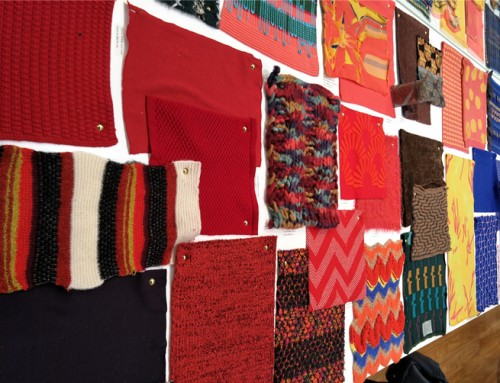
Another may work with hand embroidery, beading, printing, dye effects, crochet combinations or special embellishment.
If a factory makes one or two styles a year with a particular technique, the experience is very different from a team handling dozens — or even hundreds — of similar styles.
That difference can show up in sampling speed, technical judgment, bulk consistency and how quickly problems are recognized.
So instead of asking:
“Can you do this technique?”
Try asking:
“How often do you make this kind of product?”
For complex knitwear, frequency of experience often matters more than a simple yes or no.
- Check Whether the Factory Understands the Yarns You Like to Use
For premium knitwear, yarn is not a small detail.
It often defines the product.
Some brands regularly work with Italian yarn houses such as Cariaggi, Zegna Baruffa, LINEAPIÙ or SESIA, depending on the collection and the handfeel they want.
If a factory already works with similar yarns, development can become much easier.
They may already have sample cones, shade cards, previous swatches or experience with how a certain yarn behaves at different gauges.
That makes it easier to discuss practical questions:
Will this yarn work well at 16GG or 18GG?
Will the structure become too heavy?
How will the fabric change after washing?
Will the finished handfeel match the design direction?
Sometimes the biggest time saving does not come from knitting faster.
It comes from having already learned how similar yarns behave.
A good knitwear manufacturer should be able to discuss yarn as part of product development, not simply order whatever code appears on a tech pack.
- Make Sure the Gauge and Machine Capability Fit Your Collection
Not every knitwear collection needs the same machine setup.
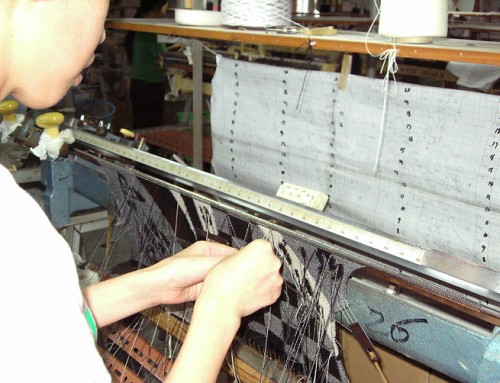
Some designs need a coarse, hand-knitted appearance and may call for gauges such as 1.5G, 3G or 5G.
Other collections are becoming lighter and more refined, using 14G, 16G or 18G for fine-gauge sweaters, polos, cardigans and lightweight layering pieces.
So asking:
“Do you have computerized knitting machines?”
is not enough.
Ask:
Which gauges do you have?
Which gauges do you use most often?
How much experience do you have with the gauge I need?
A machine existing in the factory does not automatically mean the team is highly experienced with it.
This is particularly true for fine-gauge knitwear.
At 16G or 18G, yarn consistency, tension, linking, washing and finishing can become much more sensitive.
Small defects can also be more visible on a clean, fine surface.
If fine gauge is important to your brand, the knitwear manufacturer should be able to show real examples — not only a machine list.
- Check Whether the MOQ Works With Your Actual Business Model
For independent brands and designer labels, the first order for one style may be relatively small.
This is where MOQ matters.
But we do not think MOQ should be discussed as one number only.
For example:
100 pieces in one color is very different from 100 pieces split across five colors.
The yarn requirement changes.
Dyeing or stock availability may change.
Machine setup, size breakdown and production planning can all change.
At FINE KNIT, small-batch projects can be discussed from around 100 pieces, depending on the yarn, colors, construction and development requirements.
The best approach is to tell the factory the real structure of the order:
How many styles?
How many colors?
How many pieces per color?
What is the size breakdown?
Is repeat production likely?
A flexible small batch knitwear manufacturer should help you find a workable structure instead of only repeating a minimum quantity.
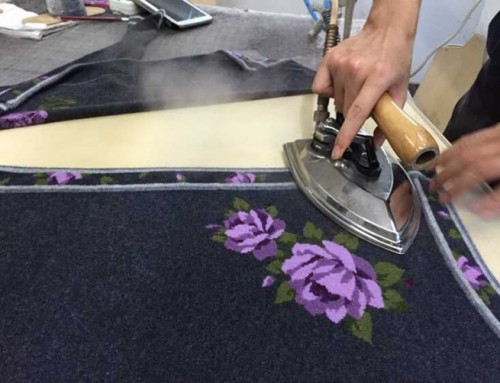
- Pay Attention to Washing, Finishing and Handfeel
Customers may never know what gauge you used.
They may not know the stitch name either.
But they will feel the garment immediately.
Is it soft?
Is it too dry?
Does it have enough body?
Is it too loose?
Does the collar feel stable?
Does the fabric feel pleasant on the skin?
Handfeel is one of the strongest parts of the knitwear experience.
And the same yarn can feel very different depending on stitch density, washing and finishing.
This is why a factory should not only know how to knit the garment.
It should understand the handfeel you are trying to achieve and how to move the sample in that direction.
For premium brands, this part of the conversation is often just as important as the fiber composition printed on the label.
- Use the Sampling Stage to Judge How the Factory Thinks
In our view, sampling often tells you more about a future supplier relationship than the first quotation does.
A reliable knitwear manufacturer should be willing to point out technical risks before they become expensive problems.
For example:
A yarn may be too fine or unstable for the intended 18G construction.
A stitch structure may become much heavier than the designer expects.
A 2×1 rib neckline may lose shape after washing if density, yarn and finishing are not controlled correctly.
The important thing is not whether a problem appears.
Knitwear development always involves technical decisions.
The important thing is how the supplier responds.
Do they simply say:
“OK, we can do it”?
Or do they explain the risk and suggest one or two realistic alternatives?
For a designer or product developer, that kind of technical judgment can be more valuable than saving a few dollars on the first quotation.
- Ask How the Approved Sample Is Carried Into Bulk Production
Many factories can make a good sample.
The harder question is whether bulk production can stay close to that approved sample.
Handfeel, measurements, stitch density, neckline shape, color and finishing all need to be controlled when the order moves from one sample to dozens or hundreds of pieces.
It is worth asking:
How is the approved sample recorded and stored?
What production specifications are checked?
How are deviations handled?
Who is responsible for final quality approval?
How are washing and finishing standards controlled?
These questions are not very glamorous.
They rarely appear on a beautiful factory homepage.
But they are often what determines whether production feels calm or stressful.
A good knitwear supplier should have a clear bridge between development, sampling and bulk production.
- Finally, Ask Whether Communication Feels Sustainable for the Long Term
Knitwear projects change.
Sometimes the issue is yarn.
Sometimes it is fit.
Sometimes it is a technique.
Sometimes it is quantity, cost or delivery.
That is why we do not think the best supplier relationship is simply:
Tech Pack → Quotation → Order → Shipment
Long-term cooperation works better when both sides can talk openly about:
What is possible?
What carries risk?
What should be changed?
What should be protected?
Where can cost be reduced without damaging the design?
The right knitwear manufacturer should understand what the brand is trying to create, but also be comfortable saying when something may not work as expected.
That kind of communication becomes especially important when a brand is developing more complex products or working with lower quantities.
The Right Factory Is the One That Fits Your Product
We do not believe every brand should choose the same type of factory.
A company producing hundreds of thousands of basic sweaters every year needs a very different supply chain from an independent designer brand producing 50–100 pieces per style with a strong focus on yarn, fit, handfeel and technical details.
So instead of beginning with:
“Which country makes the best knitwear?”
or:
“Who gave me the lowest price?”
A more useful question is:
“Does this factory’s product level, technical experience and way of working genuinely fit my brand?”
Finding the right knitwear manufacturer is not about finding the biggest factory, the most famous country of origin, or the lowest quotation.
It is about finding a production partner whose everyday capabilities match the product you want to build.
CTA
If you are developing premium knitwear and are not sure whether your current yarn, gauge, construction or order quantity is suitable for production, you are welcome to share one or two reference styles with FINE KNITTING.
We can first look at the technical feasibility, rather than beginning with a quotation.