
For many fashion brands, the first sample gets a lot of attention. Does it look good? Is the price acceptable? Is the supplier responsive? Can the factory meet the requested delivery date? All of these things matter.
But if you are looking for a supplier you can work with for two years, five years, or even longer, the more important question is not whether the first sample is impressive.
It is whether the same standards can be maintained season after season.
In our experience, many supply-chain problems do not come from a factory being technically unable to make a sweater.
More often, problems begin because information was not recorded properly, sample versions became unclear, yarn references disappeared, delivery dates were promised too easily, or the bulk production team was working from a different standard than the development team.
That is why we believe a reliable knitwear manufacturer should be evaluated not only by what it can make today, but by how consistently it can manage information, decisions and production over time.
Here are seven signs we believe are worth looking at.
- Product Measurements and Technical Details Are Recorded Consistently
One of the clearest signs of a reliable knitwear manufacturer is disciplined record keeping. Once a style has been developed, the important information should not disappear when the order is finished. Depending on the product, a factory should normally be able to retain information such as: measurement specifications, yarn information, gauge, stitch and construction details, color references, sample comments, washing and finishing requirements, important technical notes, approved quality standards
These records become especially important after time has passed. Imagine that a brand comes back two years later and says: “We would like to repeat the cardigan we made before.” The answer should not depend on somebody saying: “I think I remember how we made it.” The goal should be to return to the original approved product information as closely as possible. Long-term cooperation cannot depend entirely on the memory of one merchandiser, technician or production manager. People take holidays. Teams change. Staff move to different positions. A strong supplier needs a system that keeps the product knowledge inside the company.
- Every Sample Revision Has a Clear Version
Knitwear development rarely ends with the first sample. A style may move through several stages:
1st Sample
2nd Sample
SMS = Salesman Sample
PP Sample
Shipment Sample
During this process, many things may change. The neckline may become tighter. The body may become shorter. The sleeve width may change. The stitch density may be adjusted. The wash or finishing may also change. If those comments are spread across emails, WhatsApp messages, WeChat conversations and handwritten notes, confusion can develop very quickly.
The problem is simple:
Which version is actually correct now?
A reliable supplier should have a clear way to record: which sample version is being reviewed, what was changed, which comments have already been completed, which issues are still open, which sample became the final approved reference. This becomes even more important with complex knitwear. The more development steps a style requires, the more valuable clear version control becomes. A reliable knitwear manufacturer should not ask the brand to reconstruct six months of sample history every time a question appears.
- Yarn, Color and Dye-Lot Information Can Be Traced
For knitwear, yarn information is part of the product itself. It should not be treated only as a purchasing detail. For an important style, it is useful to retain information such as: yarn supplier, yarn name or code, fiber composition, yarn count, color code, stock color or custom dye, dye lot or batch reference where relevant
Why is this important?
Imagine a customer says: “We would like to repeat the grey merino cardigan we made two years ago.”
If the only record says: “Grey wool”, that information is almost useless. There may be dozens of grey shades.
And even when two yarns both say 100% merino wool, differences in supplier, yarn count, twist, dyeing and finishing can create very different results.
Good traceability does not mean that a sweater produced years later can always be made absolutely identical. That would not be a realistic promise.
But it does mean that the brand and factory can go back to the original reference and understand what they are trying to reproduce.
For repeat orders, this can save a great deal of unnecessary redevelopment.
- Risks Are Raised Before They Become Bigger Problems
No production process is completely free of risk. A yarn may suddenly become unavailable. A custom color may require a longer dyeing lead time. A stitch structure may behave differently when moving from sampling into bulk production. A washing result may change when the production lot changes. The important question is not whether a problem ever happens.
The important question is:
When does the customer hear about it?
A reliable knitwear manufacturer should be willing to tell the customer:
“We see a potential risk here.”
even when the final solution has not yet been decided.
From our point of view, this is an important part of long-term cooperation.
Most brands understand that production can have problems.
What creates frustration is discovering a problem much too late.
For example, if the factory already knows that a yarn delivery is delayed, waiting until a few days before shipment to inform the customer does not make the problem smaller.
It simply gives the customer less time to react.
Long-term trust is not built by pretending that production is always perfect.
It is built by making sure that important problems do not become unpleasant surprises.
- Sample and Bulk Lead Times Are Realistic
Every brand wants development to move faster.
Every factory also wants to satisfy the customer.
But in a long-term relationship, a realistic delivery date is usually more valuable than an aggressive promise that cannot be kept.
For example, if a sample normally needs around two weeks, promising five days simply to win the project may create the wrong expectation from the beginning.
If it eventually takes fifteen days, the customer remembers the missed promise rather than the real production difficulty.
The same applies to bulk orders.
If a special yarn, hand process, embroidery, washing treatment or other operation is likely to affect the schedule, it should be discussed as early as possible.
A professional supplier should be comfortable saying:
“This timing is realistic.”
or:
“We can try to meet this date, but there is a risk if the yarn arrives late.”
There is an important difference between speed and predictability.
A brand can often plan around a realistic four-week production schedule.
It is much harder to plan around a two-week promise that repeatedly becomes four weeks.
A reliable knitwear manufacturer does not need to promise the fastest lead time every time.
It needs to give the brand a timeline that both sides can actually plan around.
- Bulk Production Follows the Approved Sample
A beautiful sample has limited value if the bulk production does not follow it.
Before production begins, the brand and factory should agree on a clear standard.
In many cases, the most practical reference is the final approved sample.
That sample can help answer questions such as:
Which handfeel is correct?
Which measurements are final?
How firm should the neckline be?
What is the accepted color?
What should the washed surface look like?
How should special techniques be executed?
What level of variation is acceptable?
Without a shared standard, quality discussions can quickly become subjective.
One person may say:
“This feels fine.”
Another may say:
“This feels different from the approved sample.”
The approved sample gives both sides something more objective to return to.
For us, this is one of the most important connections between development and production.
A reliable knitwear manufacturer should have a clear way to connect bulk production back to:
Approved Sample + Production Specification + QC Standard
The goal is simple.
The bulk should not slowly drift away from the product that the customer originally approved.
- Reorder Information Is Still Available Years Later
This may be one of the best tests of whether a factory is truly built for long-term cooperation.
Imagine a customer contacts the factory and says:
“We made this style with you several years ago. We would like to produce it again.”
Can the factory still find the important information?
Can it find:
the original yarn
the color reference
the measurement specification
previous sample comments
wash and finishing requirements
the approved sample information
previous production notes
If all of that information has disappeared, every repeat order becomes another first order.
That is not what a long-term supplier relationship should feel like.
Ideally, the opposite should happen.
The longer the brand and factory work together, the more product knowledge they should accumulate.
Development becomes easier.
Repeat orders become easier.
Old problems do not need to be discovered again.
The factory gradually understands how the brand likes its knitwear to fit, feel and finish.
For important or classic styles, retaining useful information for five years—or sometimes even longer—can have real value.
Fashion changes quickly.
But successful products sometimes return many years later.
When they do, historical records become an operational asset.
What Makes a Reliable Knitwear Manufacturer Different?
Most of the things discussed above are not very glamorous.
Measurement sheets.
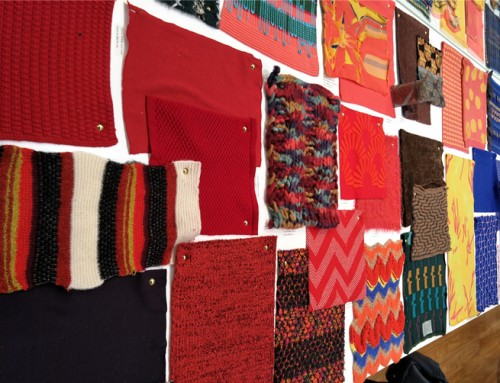
Sample cards.
Yarn codes.
Color references.
Dye-lot records.
QC forms.
Approved samples.
Historical order files.
These things are rarely as attractive as a beautiful campaign image or finished sweater.
But after working with knitwear for many years, we have increasingly come to believe that these ordinary systems are what make long-term cooperation feel easy.
The customer knows:
Previous information can still be found.
Problems will be raised early.
Lead times will not be promised casually.
Bulk production will be checked against an agreed standard.
A repeat order does not need to begin from zero.
Over time, this creates something that is difficult to show on a specification sheet but extremely valuable:
confidence and peace of mind.
The customer does not need to monitor every small detail every day.
The factory gradually understands the product history, quality expectations and working habits of the brand.
At the same time, the brand also understands how the factory works and what information helps the supplier perform better.
This is how supplier relationships become more efficient over time.
Reliability Is a System, Not a Promise
Almost every supplier can say:
“We are reliable.”
But reliability is difficult to prove with a sentence on a website.
It is better judged through systems.
How is information recorded?
How are sample revisions managed?
Can yarn and color references be traced?
Are problems communicated early?
Are delivery dates realistic?
Does bulk production follow the approved sample?
Can the factory find the same product information several years later?
These questions tell us much more.
For a fashion brand, a truly reliable knitwear manufacturer is not simply a factory that can make a good sweater once.
It is a production partner that can support development, sampling, bulk production and repeat orders with a consistent working system.
Over time, that supplier relationship becomes more than a production resource.
It becomes part of the brand’s supply-chain capability.
Final Thought
When evaluating a new knitwear factory, do not only ask:
“Can you make this style?”
It may be equally useful to ask:
“If we reorder this style two years from now, how will you find everything we approved today?”
The answer can tell you a surprising amount about how the supplier works.
CTA
If you are evaluating a knitwear supplier for long-term cooperation, you are welcome to share one existing style or development project with FINE KNITTING.
Rather than starting only with a quotation, we can first discuss how the yarn, sample versions, product specifications, approval standards and repeat-order information should be managed from development through bulk production.